The modern medical industry navigates through a constant stream of information. It is more challenging for practitioners to ensure their message truly clicks with an audience. As attention spans shorten due to digital overload, whiteboard animation services in Dallas have emerged as a solution for healthcare providers looking to cut through the noise. This animation style uses hand-drawn illustrations that unfold on a clean background, mimicking a live sketching session. By letting a medical message unfold piece by piece, providers can turn complex clinical data into a clear, visual journey that viewers not only see but truly understand.
Psychological research supports this “let’s break this down together” approach. A study found that whiteboard animations lead to higher engagement and stronger retention compared to traditional text or audio formats. For Dallas healthcare organizations, this means that whether you are explaining a new surgical device or a chronic care plan, the visual progression of information improves both cognitive processing and the emotional connection between the provider and the patient. Let’s take a look at what whiteboard animations are and how your healthcare organization can benefit from them.
What are Whiteboard Animations?
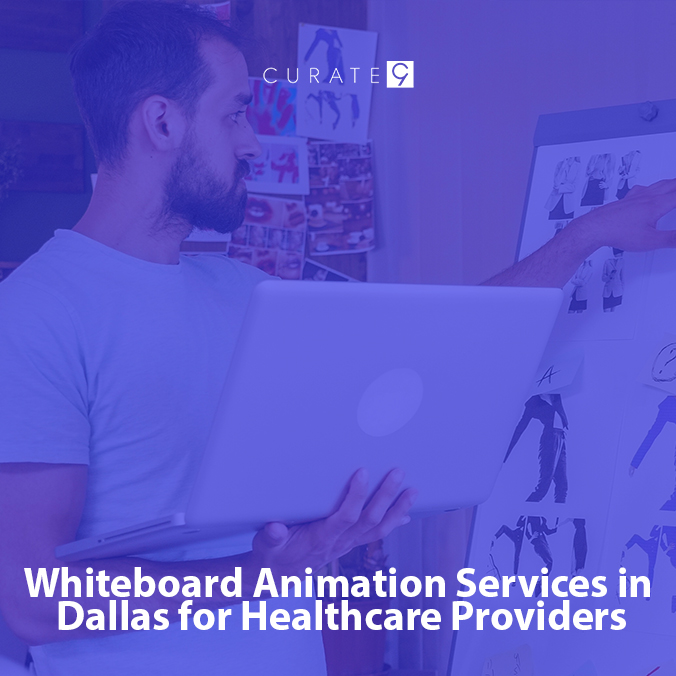
Whiteboard animation is storytelling at its most fundamental and captivating level. It is a mode of communication that combines auditory and visual stimuli to facilitate deep learning. For healthcare marketing teams, whiteboard animation naturally triggers a high level of focus and curiosity in viewers as they watch a medical message unfold in real time. The doodle animations ensure the audience’s cognitive energy is devoted entirely to absorbing the core health information.
- Hand-Drawn Authenticity: The signature feature is a virtual hand drawing each element on the screen. This creates a sense of anticipation as viewers watch each medical concept unfold in real time.
- Minimalist Design: By focusing on clean lines and a white background, these videos remove unnecessary visual clutter, ensuring patients’ focus remains entirely on the core health message.
- Narrative Flow: Each line and character is sketched with a specific purpose, building on the previous point to create a logical and engaging progression of ideas.
- Humanized Characters: Expressive yet minimal characters help make cold, clinical topics feel more relatable and human, fostering immediate trust with the viewer.
How Whiteboard Animations are Used in Healthcare
Marketing managers often face the challenge of bridging the gap between technical medical jargon and relatable patient communication. Whiteboard animation services in Dallas provide a versatile solution that addresses this friction across various organizational touchpoints.
Whether your objective is to simplify a new MedTech device for clinicians or to walk a nervous patient through a postoperative care routine, this medium provides a level of clarity that live-action video simply cannot match.
1. Patient Education and Health Literacy
One of the greatest hurdles for healthcare marketers is bridging the literacy gap. Whiteboard videos allow clinics to explain chronic conditions like diabetes without using intimidating medical terminology. Visualizing how insulin works makes the information actionable. It is particularly effective for high-stakes communication where any ambiguity could lead to non-compliance or a misunderstanding of critical pharmaceutical mechanisms.
2. Clinical Staff Training and Onboarding
Marketing and HR teams use these animations to combat training and information fatigue. They are highly effective for outlining antibiotic selection criteria or new hospital protocols, offering a refreshing alternative to static manuals and long PowerPoint sessions.
3. Pharmaceutical Mechanism of Action (MoA)
Explaining how a drug interacts at a molecular level is notoriously difficult. Whiteboard animation uses visual metaphors to illustrate cellular pathways, making the “invisible” visible for both clinicians and potential pharmaceutical investors.
- Stakeholder and Investor Engagement
Visual consistency is crucial when presenting innovations to stakeholders or regulatory bodies, consistency is key. Whiteboard videos ensure that every investor receives the same clear, high-impact message, building confidence in the organization’s mission and technological advancements.
Well-Known Whiteboard Animations in Healthcare
Top-tier healthcare organizations have already demonstrated that visual content drives superior results. By analyzing successful campaigns from global leaders, Dallas-based healthcare marketing teams can see how simplicity effectively builds trust and authority within a crowded marketplace.
These organizations have moved away from flashy graphics in favor of the focused, narrative-driven style of whiteboard animation to ensure their educational goals are met with high retention. These examples prove that when medical concepts are presented in a hand-drawn format, they feel more accessible and human, encouraging viewers to engage more deeply with the brand.
- Osmosis Medical Education: The gold standard for medical whiteboard content, Osmosis revolutionized medical education, helping dental and medical students master basic science and clinical concepts.
- The British Heart Foundation: They utilize the simplicity of whiteboard drawings to explain the mechanics of heart conditions and the function of various medications to a global audience.
- TruScribe MedTech Series: Specialized in handcrafted animations, TruScribe has successfully used this format to detail device functionalities for clinicians, ensuring regulatory compliance while maintaining high engagement.
Tools Used for Whiteboard Animations
While the hand-drawn animations appear simple, it is supported by sophisticated technology that enables precision and professional execution. Whiteboard animation uses high-end software that mimics the hand-drawn feel to maintain medical accuracy. There are also AI-assisted asset generation and specialized animation suites that meet strict regulatory standards for marketing materials.
- VideoScribe and Doodly: These are popular choices for creating a hand-drawn effect, offering vast libraries of medical icons and smooth transition effects.
- Camtasia: Some providers use a combination of screen recording and video editing to create a more customized, live feel for their educational modules.
- Adobe Animate with Firefly AI: Allows for faster asset generation and realistic motion paths for complex medical procedures.
- Gen AI Tools: Tools like Mango AI and Powtoon Imagine enable faster script-to-visual conversion while maintaining professional quality.
Cost of Whiteboard Animations in Dallas
Budgeting for the best whiteboard animation services in Dallas requires an understanding of the trade-off between speed, medical accuracy, and custom illustration. For marketing managers, the cost is an investment in reducing patient readmission rates and improving health outcomes through better education.
The costs cover everything from initial script research to professional voiceover artists. Professional whiteboard animation typically ranges from $2,500 to $9,000 per minute. The wide range depends on whether the studio uses handcrafted illustrations or digital templates.
- Production Style: Handcrafted, custom-drawn videos require more artist time and generally sit at the higher end of the pricing scale.
- Script Complexity: Deep medical research needs review and approvals before animations are made..
- Custom vs. Library Assets: While softwares have many character designs, a custom drawings for your facility provide higher brand uniqueness but require more labor.
- Voiceover Talent: Professional medical narrators ensure your brand sounds empathetic and authoritative.
Choosing a Whiteboard Animation Service in Dallas
Healthcare animations in Dallas requires careful planning to maintain technical and medical compatibility. Marketing managers must ensure the designers understand the high-stakes nature of healthcare communication and the rigorous standards required for patient-facing content. A qualified service provider such as Curate9 will demonstrate a deep understanding of your medical niche and a workflow that integrates with your legal and clinical review boards. Before choosing a designer, look for the following:
- Verify Clinical Fluency: Assess if the team can grasp your medical vertical without constant hand-holding.
- Evaluate Discovery: Look for partners who proactively ask for regulatory guidelines and patient persona data.
- Demand Technical Workflows: Ensure the schedule includes a medical review stage to prevent late-stage script rewrites.
- Prioritize Asset Portability: Select studios that provide individual illustrations for use in brochures and social graphics.
Conclusion
Whiteboard animation is a strategic tool for healthcare providers who need to make complex ideas click. By utilizing whiteboard animation services in Dallas, you ensure that your message is not lost behind prescription notes.
Curate9 specializes in turning clinical concepts into compelling visual stories. Our approach focuses on simplicity, pacing, and emotional connection, ensuring that every frame supports your brand’s vision and your patients’ health goals.
Contact Curate9 for engaging and clinically compliant whiteboard animations.
Frequently Asked Questions
What is the benefit of whiteboard animation for Dallas providers?
The primary benefit of whiteboard animation services in Dallas is the ability to simplify complex medical topics. By using hand-drawn visuals and synchronized narration, providers can improve information retention and ensure patients truly understand their treatment plans.
Does whiteboard animation work for internal staff training?
Yes, whiteboard animation is highly effective for training because it breaks down technical protocols into digestible visuals. This makes it easier for clinical staff to remember compliance rules and device functionalities, leading to better safety and operational efficiency.
How long should a healthcare whiteboard video be?
A healthcare whiteboard animation should typically be between 60 and 90 seconds. This length is ideal for holding the viewer’s attention while providing enough detail to explain a concept or procedure clearly without causing information overload.